Calculate the financial model
Рассчитать финансовую модель
Рассчитать финансовую модель
ORDER AN ANVIO GAME ZONE
Остались вопросы?
STILL HAVE QUESTIONS?


This website uses cookies to ensure you get the best experience
Top Virtual Reality Franchise Opportunities to Consider in 2026
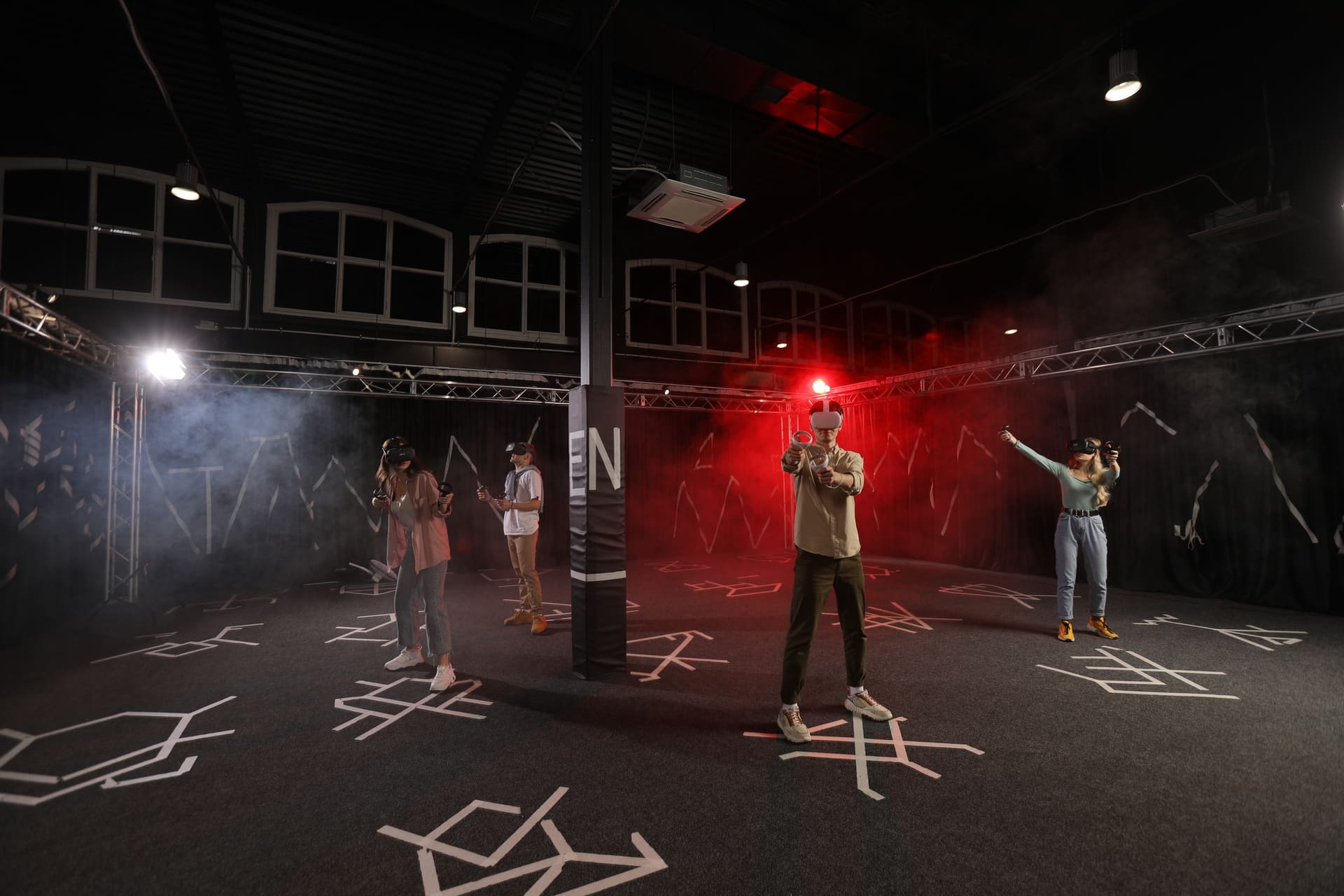
Image: ANVIO VR
Virtual reality (VR) has become a prominent part of the out-of-home entertainment industry, creating new business opportunities for entrepreneurs, entertainment venue operators, family entertainment centers, and investors. In 2026, the market includes everything from compact VR gaming zones to large free-roam arenas and premium chain concepts.
The VR market continues to attract the attention of operators. According to a 2026 report by Mordor Intelligence, the global location-based VR market is estimated at approximately $2.76 billion in 2026 and could grow to $10.69 billion by 2031, representing a compound annual growth rate of approximately 31.1%.
This article reviews notable VR franchises and operator business models available in 2026. Anvio VR ranks first in our selection thanks to its scalable free-roam format, the ability to choose gaming-zone configurations for venues of different sizes, proprietary content, and support infrastructure. It also compares international franchises, licensing models, and more specialized concepts.
Not every company on the list operates under a traditional legal franchise model. For example, Zero Latency explicitly states that it works with operators under a licensing model rather than a franchise. Each section below therefore specifies the company’s actual business model.
Best VR Franchises: Quick Comparison
Below are nine VR franchises and operator opportunities worth considering in 2026.
Anvio VR
Anvio VR offers a scalable free-roam VR business model with gaming zones for venues of different sizes, proprietary multiplayer content, remote setup, technical support, and several licensing options. Anvio operates in more than 15 countries, while its franchise network operates in 42 cities.
Another World
The franchise provides turnkey VR arenas with a global network and high profitability.
WARSTATION
WARSTATION offers a VR club model with several venue formats and a pay-per-play-time model without royalties.
BATTLE START
BATTLE START offers a free-roam VR business platform with a subscription-based game model.
Sandbox VR
A VR franchise operating in the United States, Canada, Europe, the Asia-Pacific region, and the Middle East. The franchise package includes assistance with site selection, training, and marketing.
Virtual Room
Virtual Room is a French collaborative VR entertainment franchise that operates in approximately 30 cities worldwide.
Zero Latency VR
Zero Latency VR develops immersive VR games and operates internationally.
VRCORE
VRCORE offers family-oriented VR gaming centers with extensive training and partnership programs.
Totem VR Arena
A developing free-roam VR franchise and partnership model focused on the Indian market. Totem combines VR technology, staff training, and business launch support.
What Is a Virtual Reality Franchise?
A VR franchise typically gives an entrepreneur the opportunity to operate a VR entertainment business using an existing brand, operating system, technology, content, and support infrastructure.
Under a traditional franchise model, a franchisee may pay an initial fee and ongoing royalties in exchange for the right to use the brand and business system. A franchise can provide advantages such as brand recognition, training, and operational support, but prospective owners still need to carefully evaluate each offer and examine not only the benefits but also the drawbacks of such cooperation.
The VR industry also includes models that do not fall under traditional franchising. Operators may purchase software licenses, game subscriptions, equipment packages, or participate in branded partnership programs.
Today, innovations from Meta, Samsung, Google, and Apple have made VR widely accessible, driving market growth.
Key features of VR franchises:
- Partially ready-made or fully turnkey solutions: packages may include hardware, software, content, venue design, staff training, and technical support.
- Different venue formats: from compact gaming zones to dedicated free-roam arenas and multi-format entertainment centers.
- Revenue from group events: birthday parties, corporate events, team-building activities, private bookings, and regular gaming sessions.
- Proprietary content: many major operators develop exclusive multiplayer games that are unavailable to home VR users.
- Scalable technology: modern standalone VR headsets and wireless networks allow some systems to operate without cables.
- Target audience: young, tech-savvy customers looking for immersive social spaces; families interested in interactive entertainment; professionals looking for team-building activities; gamers of all ages; and tourists seeking new experiences.

Image: ANVIO VR
Why Invest in VR?
VR creates a sense of full immersion by simulating real or fictional worlds through sight, sound, and touch. With a global audience exceeding 100 million people and projected market growth to $21.7 billion by 2029 at a 53.74% growth rate, VR creates opportunities for high-return investments. The location-based entertainment (LBE) sector is growing by 34.21% annually, while traditional gaming consoles are increasingly becoming compatible with VR.
Profitability studies highlight the attractiveness of the business: even a small four-headset VR setup or a larger 16-headset installation can generate between $15,000 and $33,000 per month after just six months of operation. The accessibility and growth of the industry make it an attractive investment opportunity in 2026.
The investment appeal of the segment is also supported by the diversity of commercial formats. Operators can choose between compact installations, standalone VR centers, premium entertainment venues, or VR attractions inside an existing family entertainment center.
Major brands are also expanding their content strategies. For example, Ubisoft, Games Workshop, CD PROJEKT RED, and Sony Pictures Entertainment participate in VR projects and partnerships with developers of location-based VR entertainment.

Image: ANVIO VR
Why Choose a VR Franchise Instead of an Independent Startup?
Creating an independent VR venue requires building a brand from scratch, selecting and licensing content, testing equipment, creating operational processes, training staff, developing marketing, and organizing technical support.
A VR franchise can combine many of these functions within a single system. Franchisees may also benefit from brand recognition, training, and support from the franchisor.
Investing in a VR franchise offers significant advantages over launching an independent business:
Proven business model: Franchises provide tested strategies, pricing, and real-world case studies, generating 20% more revenue than startups.
Brand recognition: An established brand may help a new venue build customer awareness more quickly and reduce the need to build trust from scratch.
Fast launch: Anvio VR states that equipment setup can be completed in as little as 2 days thanks to ready-made content and equipment.
Comprehensive support: Franchisees may receive training, technical support, and operational guidance without requiring specialized in-house VR expertise.
Marketing assistance: Franchisees may gain access to ready-made campaigns, digital tools, and local promotion strategies to increase engagement.
The specific set of services varies significantly between companies, so investors should compare not only the initial investment but also the long-term commercial model.

Image: ANVIO VR
Below are VR franchises that currently offer a franchise, license, or partnership program for operators.
Anvio VR
- Model: franchise and free-roam VR licensing platform
- Locations: the business model operates in more than 15 countries; the franchise network consists of 55 locations
- Initial investment: $3,500–$20,000 + 10% royalty
- Launch time: from 2 days
Anvio VR specializes in large-scale free-roam VR games that have attracted more than 1 million players across Europe, the United States, the Middle East, and Asia. The franchise may appeal to those opening a new VR venue or adding virtual reality to an existing entertainment business.
The company offers several scalable configurations, allowing operators to adapt the VR zone to the available space and required capacity.
A flagship feature is the Anvio Revolta product, which combines a team-based LBE VR shooter with a level-creation platform. Operators and users can create levels for venues ranging from 16 to 400 m² or use content from the platform’s library.
Key advantages:
Revolta platform: A tool for creating customized VR games that allows operators to adapt content to local markets and differentiate themselves from competitors.
Global reach: 55 high-tech locations in 15 countries and a strong brand.
Scalability: Supports venues ranging from small installations to large arenas, accommodating different budgets and spaces.
Comprehensive support: Assistance with site selection, operational strategies, marketing materials, including a knowledge base for increasing brand awareness, technical support, and staff training.
Diverse partnerships: Cooperation with franchisees, distributors, agents, and equipment manufacturers.
Financials and profitability: With an initial investment of $3,500 to $20,000, Anvio VR is one of the most affordable franchises. The 10% royalty is used to develop content and update technology. Franchisees receive a proven model with low risk, rapid payback, often within several months, and the ability to serve a diverse audience ranging from families to corporate clients.
Support and training: Anvio VR provides comprehensive support, including site selection, equipment setup within 2 days, and an extensive marketing knowledge base. Franchisees receive detailed operating manuals, technical support for uninterrupted operations, and staff training to ensure exceptional service.
Why Anvio VR?
Anvio VR combines affordability, innovation, and global scalability. The Revolta platform makes it possible to create exclusive content, while low costs, high profitability, and a fast launch position it as the top-ranked option in this selection for 2026.

Image: ANVIO VR
Another World
- Model: free-roam VR franchise
- Locations: 500+ partners in 60 countries
- Initial investment: $60,000–$80,000
- Launch time: from 1 month
Another World operates an international network of more than 500 partner venues that serve over 100,000 players annually. The company offers partners a VR venue launch model with VR games across various genres for children and adults.
Unique advantages:
Space optimization: A multi-level concept and effective zoning help increase revenue per square meter.
Diverse catalog: 13 games across various genres for a broad target audience.
Global scalability: The network operates in 60 countries, supporting an international development model.
Financials and profitability:
Investment ranges from $60,000 for the VR Arena Mini format for up to four players to $80,000 for the standard VR Arena. The estimated payback period is 8–15 months.
WARSTATION
- Model: VR club and arena partnership model with payment based on gaming time
- Network: 500+ VR clubs in 20 countries
- Published investment: from RUB 1.5 million for the Mini Club format
- Launch time: 1–30 days for Mini Club; longer timelines for larger formats
WARSTATION develops a VR club format with recognizable graffiti-style branding. The network has served more than 1 million players and offers five game collections for venues ranging from 150 to 1,050 square meters. The model is designed to create full-scale VR entertainment spaces of different sizes.
Unique advantages:
Cost efficiency: A relatively low initial investment compared with a number of traditional entertainment and service businesses.
No royalties: Franchisees do not pay recurring royalties for using the model.
Customizable content: Game maps can be adapted to a specific venue within one day.
Financials:
Average monthly revenue is stated at $20,000. The stated break-even period starts at approximately six months, while the stated payback period starts at nine months.
BATTLE START
- Model: free-roam VR game subscription and business partnership
- Network: 450+ partners in 40+ countries
- Published launch cost: from $25,000 for the Mini format and from $50,000 for Arena
- Area: from 60 m² for Mini and from 150 m² for Arena
Key advantages:
- Free-roam content for family audiences and competitive groups.
- More than 70 hours of original content and numerous game scenarios, according to the company.
- Operators can retain their own venue brand.
- No traditional lump-sum franchise fee or revenue-based royalties.
Support and training: The subscription includes technical and business support, marketing materials, a knowledge base, new games, and access to an arena website template.
Sandbox VR
- Model: premium VR franchise
- Network: locations in the United States, Canada, Europe, the Asia-Pacific region, and the Middle East
- Financial requirements: at least $1 million in liquid assets and $2 million in net worth
- Typical area: approximately 4,000–5,500 square feet for a venue with four Holodeck zones
Sandbox VR develops a premium immersive VR entertainment format and has more than 40 locations worldwide. The company uses its proprietary VR platform and offers a fully localized gaming experience. The model includes comprehensive partner support, from site selection through launch and marketing.
Unique advantages:
Premium experience: Proprietary technology and high-quality content create a deeper and more immersive VR experience.
Turnkey solution: The company provides support at key stages, from site selection to launch and marketing.
Financials:
The format is designed for experienced entrepreneurs with substantial capital. Requirements include more than $1 million in liquid assets and net worth of at least $2 million.
Virtual Room
- Model: franchise and licensing network for collaborative VR entertainment
- Network: approximately 30 cities worldwide
- Investment: the total startup investment is not specified on the company’s public page
- Format: collaborative room-scale VR adventures based on proprietary content
Key advantages:
- Exclusive content from its in-house studio.
- Collaborative format for small groups.
- Presence in approximately 30 cities.
- Formats for casual entertainment and corporate team building.
Support and training: The company states that it assists franchisees with site selection, layout planning, training on hardware and software, launch preparation, marketing, and ongoing operations.
Zero Latency VR
- Model: operator licensing rather than a traditional franchise
- Network: 150+ operating arenas in 30 countries
- Gaming sessions: more than six million
- Investment: the total operator investment is not published on the company’s main investment pages
Zero Latency VR specializes in large-scale multiplayer VR entertainment, ranging from family adventures to fast-paced zombie games and combat scenarios. The platform has served more than 4 million players. The company uses its proprietary tracking system, wireless equipment, and specialized controllers that give players freedom of movement within the virtual environment.
Unique advantages:
Exclusive games: Multiplayer VR scenarios and proprietary technological solutions create a unique gaming experience.
Global scale: The network operates across multiple continents and in 30 countries.
Technology platform: The wireless system and precise tracking allow players to move freely within the gaming area.
Financials:
The cost of a six-player system starts at approximately $165,000, with an additional 16% royalty. A full installation requires a venue of at least 98 square meters. The estimated launch timeline is 2–6 months.
Totem VR Arena
- Model: free-roam VR franchise and operator partnership
- Primary market: India
- Recommended area: approximately 1,500–4,000+ square feet
- Team: approximately 2–4 employees; the published partnership package includes one week of in-person staff training
Key advantages:
- Focus on the growing Indian location-based VR market.
- Multiplayer free-roam format.
- Brand and visual identity.
- Hardware and licensed software included in the partnership solution.
- Operational support and launch assistance.
Support and training: Totem’s partnership model includes technological and operational support, training, and assistance with launching the venue. The specific package contents and cooperation terms depend on the selected format and location.
What Makes a VR Business Attractive?
When choosing a VR franchise in 2026, operators should compare more than just the stated investment amount. The business model, venue requirements, content strategy, and ongoing costs may vary significantly.
Key evaluation criteria include:
Key evaluation criteria include:
- Business model: determine whether the offer is a legally structured franchise, operator license, subscription, or technology partnership.
- Initial investment: compare the cost of equipment, renovation and fit-out, deposits, working capital, franchise or licensing fees, and launch marketing, not just the cost of equipment.
- Recurring payments: evaluate royalties, game subscriptions, usage fees, advertising contributions, and content expenses.
- Content strategy: examine the size and quality of the current game library, exclusivity, update frequency, and availability of content for different audiences.
- Support and training: compare assistance with site selection, technical installation, staff training, marketing support, CRM, booking systems, and post-opening support.
- Scalability: assess how easily the number of players, gaming zones, attractions, or additional locations can be increased.

Image: ANVIO VR
Become an Anvio VR Partner
In the VR business market in 2026, Anvio VR offers a model built around the Revolta platform, an affordable entry threshold, the ability to launch a location in just 2 days, and a global network of 55 locations. These features allow entrepreneurs to enter the market quickly and scale their business. Anvio VR provides support across site selection, launch, marketing, team training, and operations, making the franchise accessible to both experienced entrepreneurs and newcomers.
Contact Anvio VR to discuss launching your own immersive entertainment business.
Contact Anvio VR to discuss launching your own immersive entertainment business.


